FARHIRA FARUDIN

Why Are Movie Awards So Much Better Than Music Awards?

Tuesday, February 21, 2017
BY JOHN NORRIS


Last week, I cast my annual ballot in the Screen Actors Guild Awards, and as usual there were some tough calls: How to choose, for example, outstanding performance by a cast in a motion picture when I had great ensembles like Birdman, Boyhood, and The Grand Budapest Hotel to pick from (Birdman won). Likewise, if I were voting in the upcoming Academy Awards, there would be some equally hard choices, because generally the greatest achievements in film—this year's sniping around Sniper and Selma notwithstanding—do in fact get nominated.

On the other hand, if I were a voting member of the Recording Academy, charged with casting a ballot for the Grammy Awards, I think I would often face the opposite problem—not enough worthy nominees. In this year's "top" Grammy category, Album of the Year, only Beyoncé's bold self-titled LP, easily her most interesting record to date, and Beck's Morning Phase have any business being in the running. Sam Smith may be the most gifted male pop vocalist to emerge in a generation—he's so award-friendly that he seems to have been crafted just for the purpose of collecting golden gramophones—but his album as a whole was underwhelming. And Pharrell Williams's Girl and Ed Sheeran's X? Classic cases of middling records by artists inoffensive enough to have become Recording Academy favorites.

Why do movie award ceremonies get it right so much more often than music awards do? You can quarrel with the whole concept of awards for art, period—plenty have and do for good reason—but that's a separate conversation. Awards exist. And among those that do exist, how is it that movie prizes regularly make credible choices, and music awards are so wildly off the mark? Here's what I think.

There's Too Much Music
According to the measurement company Rentrak (via the MPAA), somewhere between 600 and 700 movies are released in the US annually—659 in 2013, to be exact. Care to guess how many albums are released in the same amount of time? Try one hundred times that. Nielsen put the number of physical and digital album releases in 2010 at 75,000.

Since many awards require submission for consideration to be nominated, only a fraction of those films and records are really going to be contending. But according to the Recording Academy, somewhere in the neighborhood of 20,000 music releases are considered for Grammy nomination every year. That's exponentially more than the number of movies. That means that anyone hoping to do a credible, comprehensive job of honoring music is taking on a Herculean task.

Music Awards Are More Worried About Money and Youth
Most music awards don't even bother to try and be comprehensive or particularly credible, they just opt for mass appeal. The imperative to honor the familiar and the most commercial (and hence, most beloved by teens) is overwhelming. Many music awards—including the American Music Awards, CMT Awards, and NME Awards—are unabashed popularity contests that rely on votes from fans. The Billboard Music Awards are effectively the same thing, since they rely on the charts. Others, like the MTV Video Music Awards, BRITs, and Academy of Country Music Awards, use some combination of fans and "industry professionals" to determine their winners. The Grammys, of course, rely solely on an academy of voters (more on that below).

Very few such mass-appeal awards exist in film—you won't see Guardians of the Galaxy or The Hunger Games: Mockingjay - Part 1 in contention for top honors at anything but the perennially goofy MTV Movie Awards. In fact, when this year's Oscar nominations were announced, a slew of thinkpieces were written about the dearth of big-box-office popcorn movies in the leading categories, as though that is the purpose of the Academy Awards—to maintain some sort of connection to Joe Multiplex. The bottom line: Movie awards are more concerned with achievement, music awards are all about connecting with a huge mass of fans.

Film Awards Have a Better Pool of Voters
Who better to bestow awards on you than your peers? That's the idea behind the DGA Awards, the SAG Awards, and the WGA Awards—directors, actors, and writers nominate and vote for those within their respective disciplines. Journalists and critics are in a good position to make informed decisions about film as well—think the National Board of Review, the New York and Los Angeles Film Critics' Awards, and so on.

But there are no comparable guild awards in music, and the closest thing to press awards would be prizes like Canada's media-determined Polaris Music Prize, or the UK's Mercury Prize, which is decided on by a panel of musicians, producers, and songwriters. The Oscars and Grammys are decided on by select academies of industry professionals who have either been invited to be members or applied to get in (unsurprisingly both are dominated by old white guys).

In the case of the Oscars, that occasionally may lead to something like Selma's lack of an acting or directorial nomination. As for the Grammys, you only need to consider the oft-noted fact that rap albums may get nominated for album of the year, but almost never win. Just ask Kendrick, Kanye, Wayne, and Eminem. It's been 11 years since a hip-hop record took the top Grammy—Outkast's Speakerboxxx/The Love Below. But really, the Grammys' credibility problems go way beyond that.

Music Is an Increasingly Balkanized Field
The Golden Globes separate films into dramas and comedy/musicals, which spreads the wealth, brings in twice as many stars, and gives comedies a moment to shine. However, most movie awards don't distinguish between genres (except for docs and shorts). Naturally there are rom-com fans and biopic devotees, but no one gets that worked up over their favorite kind of movie.

Music, on the other hand, has always been a more divisive, tribal game, and music awards (even the crowd-pleasing ones) regularly divide the spoils between genres. This results in head-scratchers like Lorde's designation as a "rock" artist at several award shows last year. And then there's the Grammys, which never met a genre it didn't like. In the past 20 years, music's gotten more splintered than ever, thank you internet. Being an all-encompassing, all-embracing music awards show is nearly impossible in 2015. But damn if the Grammys don't try.

The music awards of record is how they seem to see themselves. The people behind the Grammys approach their task with a sense of self-importance and ambition unlike any other music awards show on the planet, wrapping their arms around no less than 83 categories (lean and mean, compared to the even more bloated 109 they were up to in 2011), from classical to R&B, spoken word to world, jazz, rock, pop, "traditional" pop and so many, many more. Recording Academy members are encouraged, though not required, to vote within their field of expertise—a fact that goes a little way toward explaining decades of oddities in nominations and wins too numerous to go into here.

Even when you dig into genres like dance and alternative, there's a mix of the credible-yet-predictable and the just plain inexplicable. And never forget the most confounding category of all the 83—the arrogantly named "Best New Artist," which nearly every year sees the nomination of an artist who won't seem new to anyone who cares about music. That delay can be blamed on the vague criteria: "For a new artist who releases, during the Eligibility Year, the first recording which establishes the public identity of that artist." There's the rub. "Public identity"—whatever that means. This year's better-late-than-never best new artist nominee is HAIM, and I hope they win, though Sam Smith's probably got it in the bag (with an assist from Tom Petty).

That's the thing—the Grammys are still massively predictable. Years ago, when they awarded album of the year to the likes of Lionel Richie, Celine Dion, or Toto (look it up) the knock was that the awards were "out of touch" with what the kids were listening to. If they've made up some ground since on that score, and they have, there's still an undeniably clubby vibe to the whole thing, a feeling they are annually bestowing with self-satisfaction something of great consequence.

Television Makes Music Awards Dumber
Most of the music awards shows and some of the movie awards are broadcast on TV, which brings with it even a greater push for populism. And while the movie shows will fish for millennials by having, say, Channing Tatum as a presenter, or James Franco and Anne Hathaway as Oscar co-hosts in 2011, their options are somewhat limited. But the music awards? They simply go full-bore for the biggest and hottest performers of the moment—not just in terms of nominees and recipients, but in performers and presenters as well. These days, it's come to the point where, in a tradition started by the VMAs, non-nominated superstars with new records to sell are regularly booked to perform. Even the staid Grammys has picked up on the practice—Justin Timberlake two years ago, and Madonna this year.

The desire to appeal to television audiences not only impacts who presents and who performs, it also seems to impact who gets nominated for awards. A quick look at the review aggregator site Metacritic showcases the weight the Grammys appear to put on popularity over critical acclaim. The average score of the Grammy nominees for album of the year is 72. The average score for the eight Oscar nominees for best picture? A much more impressive 84.

The Metacritic movie of the year is Boyhood, with a perfect score of 100, while its closest apparent competitor in the Oscar race, Birdman, has a very strong 88. The top-scoring Metacritic Grammy Album of the Year nominee, Beyoncé, has an impressive 85 score, but Sam Smith's record only mustered a 62. A film with a 62 score wouldn't have a prayer of landing a top category Oscar bid.

Conversely, the top-grossing film of 2014, Transformers: Age of Extinction, with its dismal Metascore of 32, won't be getting near any major movie awards. But the top-grossing album of 2014, according to Billboard, is Taylor Swift's pop turn, 1989. And although its release date didn't qualify it for this year's Grammys, it's basically a shoo-in for an Album of the Year nod next year.

I get it—music awards, including the Grammys, don't only want to get it right. They want viewers. But it wouldn't kill the music industry to create one music awards show that really acknowledged achievement with as little regard for popularity as movie awards have. Surely we can have one ceremony that digs deep and honors the musical equivalent of a Birdman or Boyhood—like the brilliant War on Drugs' Lost in the Dream, Angel Olsen's Burn Your Fire for No Witness, Run the Jewels' RTJ2, or FKA twigs' mesmerizing debut LP2. Is that too much to ask?

This post is originally published in Vice. Posted by Farhira Farudin for educational purposes only.

MIMI SUHAILA

10 Tips For Dating A Girl Who Loves To Travel

Monday, February 20, 2017
BY: ALYSSA RAMOS
10 Tips For Dating A Girl Who Loves to Travel


Buckle your seatbelts boys, if you’ve fallen for for a girl who loves to travel, you’re in for a real adventure. Don’t get too excited for the ride yet though, it takes a lot more effort than you think to date a girl who travels.
It’s not as easy as dating the typical girl, but it’s definitely worth the extra effort. A girl who loves to travel thinks a little differently – she has lots of ideas and goals, and knows what makes her happy. That means she won’t deal with games, drama, or bullshit.

She also won’t settle. She won’t ever exactly be “easy to understand” , and there will definitely be times when you think she’s crazy or absent. But you’ll also think she’s amazing, loving, cultured, and genuine. So here are some tips on dating the girl who wants to travel the world, so that you can be the one she chooses to do it with. Plus check out the input from some fellow female travel bloggers as well!

1. Be Patient

A girl who loves to travel has a lot of plans. They aren’t exactly set, but they’re definitely on a to-do list. Or a ‘to-go’ list. She wants to see the world, and is figuring out how to do it. She also probably doesn’t automatically trust. Don’t give up if she seems distant. Chances are that she just wants to be, literally.

“Never ask ‘what’s your plan’…A travelling girl never knows her next destination or life decision, a life of no worries or plans is the right one for her.” – Sarah Richard, CoffeewithaSliceofLife.com

2. Be Comfortable With Confidence

Girls who travel have a tendency to be very confident, mostly because they take risks, are ambitious, and have learned a lot from traveling. Don’t let it deter you — she really doesn’t think of herself as any better than anyone else. If you’re looking for a girl who needs you, don’t date a girl who loves to travel.

“The guy has to understand that he’s not dealing with a typical girl. Girls who travel have a calling/a purpose that they have to embrace. It’s probably not going to change.” Lina Loue, WealthyNomadGirl.com

3. Be Ready For Randomness


It should be a given that a girl who loves to travel will always want to randomly go somewhere or do something. It doesn’t have to be anything extravagant, but if you aren’t the type who’s willing to go on a random adventure or road trip, it’s probably not going to work.

“The best gift is a surprise adventure/plane ticket to somewhere you’ve both never been.” – Addie Lynn Minnis, FitFabandForeign.com

4. Be Able to Schedule But Also Able to Just Go With it


It may sound like an oxymoron, but girls who love to travel have a habit of needing things to be scheduled, but then also throwing the plans away and going with the flow. Be able to plan a trip, and somewhat of an itinerary, or stick to the one she has, but don’t be surprised when you get there and everything changes.


“When you say let’s go for a 2-week trip, she will always try to find ways to extend it for at least double the time.” – Rebecca Clipsham, TheWorldasBecSeesIt.com

5. Double as a Best Friend

Chances are if you’re dating a girl who loves to travel (or trying to), that you’llbe traveling together a lot. That means you’ll also double as her best friend and partner in crime. It’s a unique and extraordinary relationship to be able to be best friends with someone you also love, and necessary to a girl who travels.

“Advice from my boyfriend (who is obviously dating a girl who loves to travel), ‘Be a guy who loves to travel!'” – Shelly Borga, NorwaytoNowhere.com

6. Be Able to Communicate

There might be times when she is traveling somewhere and can’t get service, or the time zones may be opposing. It’s important to remember that if she doesn’t contact you right away, but also important to remember when you’re responding. Forgetting to respond when she only has a certain amount of time to communicate is very bad, and even stressful. You should be able to communicate easily and consistently, whether she’s traveling or not.

“My husband said, ‘You have to communicate consistently. Be patient when there’s no communication and trust that they will be coming back to you.’” – Natasha T. Stoppel, ArtistExploresTheWorld.com

7. Don’t Be Picky

Nothing is more awkward or unattractive than when a guy is picky about things like where you’re staying, what you’re doing, and what you’re eating. Sure the room may not look the nicest, and you may have no idea what that pile of moosh is made from, but don’t make a big deal about it. Especially if she’s excited about it.

“Don’t be a picky eater. It’s very possible your girlfriend will want to try the snails in France or some street food in Mexico. For someone who loves adventures and traveling, nothing is more unattractive in a partner than turning up a nose at new foods!” – Samantha Bilkey, SamanthaEnRoute.com

8. Don’t Hold Her Back

If you can’t go with her, don’t try to hold her back from going. You might not even realize it but if you’re pouting or less than enthusiastic about her traveling, it’ll make her feel bad, and like she shouldn’t go. Not traveling won’t make her happy, so it’s best to just be encouraging and dependable. Also, never make remarks that make you sound uncertain about the length of her trip as if it will cause a damper in the relationship. Time apart should never be an issue.

“When she has a trip planned, don’t tell her to ‘stay’, even though you want to spend time with her. It’s better to tell her, ‘I’ll be waiting for your stories, and if you can and she wants, join her on the trip.'” – The Wanderlure

9. Be Adventurous


If you’re not up for hiking to a waterfall, cliff diving, or even driving to a new beach for the day, you should not be trying to date a girl who travels. We have an issue with sitting still, and always want to be doing something. Saying ‘no’ to an adventure is the same thing as holding her back.


“I feel like we don’t like to do the same things” “That’s because you like to do nothing, and I like to do everything…” – Breakup conversation

10. Be Trustworthy

Trust is essential in every relationship, but it is especially important for someone who travels. Neither person should ever have to worry when the other is or isn’t traveling, especially since sometimes it’ll be for long periods of time. Don’t give any reasons to not be trusted, and more importantly, be trustworthy.

“Be patient when there’s no communication and trust that they will be coming back to you.” – Natasha Stoppel, ArtistExplorestheWorld.com

Posted here by mimi suhaila for educational purposes only.
FARHIRA FARUDIN

The Meaning of Allahu Akbar

Monday, February 20, 2017
BY MEHREEN KASANA


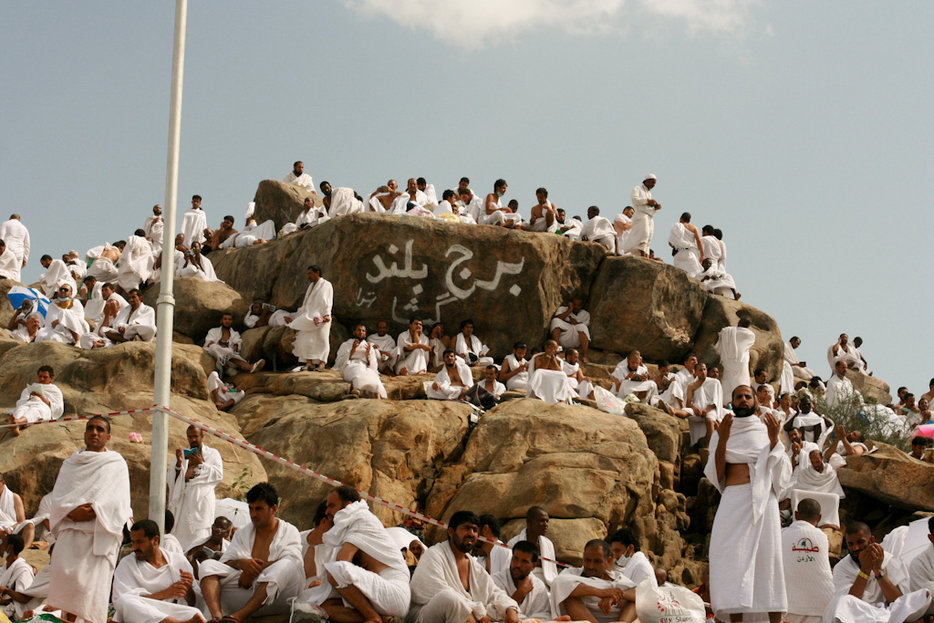
Five years ago, I stood at the foot of a parched mountain with my father a few hours before dawn, in Muzdalifah, Saudi Arabia.

We were performing Hajj—Islamic pilgrimage—together with my mother. Under an endless sky and surrounded by millions of pilgrims, we were somehow still sheltered from the cacophony of mankind. My mother waited at the bottom of the mountain while my father and I began climbing the jagged rocks in search of seventy pebbles for each of us. These pebbles were to be pelted at the three walls in Jamarat, a reenactment of Abraham’s pilgrimage—in Islamic theology, it is said that Abraham was guided by Gabriel to pelt Satan for the three times he tried to lead him astray.

The thing I remember about that night spent with pilgrims of the most gentle countenances, who spoke the universal language of laughter and tears, was climbing with my father and hearing him whisper “Allahu Akbar” as he blew the dirt off every pebble and filled his pouch. As the night blended into dawn, I bonded with papa among silent mountains, weeping men and countless stars. My mother watched from the bottom, rolling the beads of her tasbeeh, smiling when our eyes met.

Seventy pebbles sat in my pouch, seventy pebbles in his. We descended the mountain like gazelles, past the sharp ends of earth, and handed mama her share of the stones. Pilgrims began moving. I turned around to look at Muzdalifah for one last time. It is open ground surrounded by mountains, where the sky is our ceiling, the earth is our bed. And God is great.

When you enter “the meaning of Allahu Akbar” in Google, the first search results take you to Jihad Watch, Breitbart and Urban Dictionary. Jihad Watch tells you that Allahu Akbar is “the ubiquitous battle cry of Islamic jihadists as they commit mass murder.” One of the definitions on Urban Dictionary, home to some of the internet’s most passive aggressive users, states Allahu Akbar is “what is said by people beheading hogtied victims ‘in the name of God.’” And Breitbart, the ominous prophet of doom and gloom for the average conservative, insists that Allahu Akbar means “Allah is greater than your God or Government.”

Takbir—that is, Allahu Akbar—is a strange thing. It is Arabic for “God is great.” But to the westerner who consumes the world through purposefully tailored headlines, deliberate SEO and sequential images meant to invoke fear, takbir is a terrifying thing. To the westerner, it’s something ISIS members scream before bloodshed and al Qaeda members chant before deploying an IED. It’s that scary announcement from the brown man with a beard that hides his mouth, obscuring his face, making it impossible for you to trust him. It’s code for “we’re implementing sharia here,” according to astute Republicans who can’t pronounce Iran or Iraq without butchering it (figuratively and literally) but are adamant on presenting a singular, restricted and unimaginative interpretation of an expression millions of Muslims use in millions of ways.

But to the average Muslim, takbir generously lends itself to numerous occasions and emotions.

Consciously, I heard takbir for the first time when I was four, maybe five, in northern Virginia when my mother prayed in front of me. I watched her kiss the earth with all the love in her being. Before she knelt in prostration, she whispered something. She came up once more, whispered it again, then gently knelt in humility. Her forehead touched the ground, the tip of her nose softly grazing the prayer rug, her eyes closed in unwavering thought. To a child, this graceful movement was spellbinding. I strained my ear to hear her again. “Allahu Akbar.”

But takbir is introduced to us before we can even attach meaning to spoken word. When we are born, the azaan—call to prayer—is performed to us at a pitch softer than cotton. The day I was born, I had already been introduced to this expression that would later on become my refuge in times of despair, my cry in times of joy and yes, my roar in moments of indignation. My father softly recited “Allahu Akbar” in my ear when I came into this world.

Born after eight miscarriages, I was my parents’ miracle.

When words wound, to borrow critical race theorist Richard Delgado’s phrase, the first injury is confusion. How do we understand the link between the word and the wound? Is it the physical manifestation of intention that injures us? Or is it the historical context and origin—the discursive nature—of a word that lacerates our sense of belonging in this world? What if the language used was our own language appropriated against us?

I never asked myself these questions when a white man jeered “Allahu Akbar” at me on Fifth Avenue. He gestured a bomb exploding over his head and then went on his way. Questions rooted in theory abandon you when the banality of violence takes you as its hostage. I never asked myself these questions when alt-right Twitter users spread misinformation about the Quebec mosque shooting—initially, Fox News reported that the suspect was a Muslim of Moroccan origin who shouted “Allahu Akbar.” When authorities confirmed the suspect was a white French Canadian with a predilection for Marine Le Pen and Donald Trump, the neo-fascist Twitter-sphere made no attempt to amend the error, despite Fox issuing a correction at the request of the Canadian government.

I had to ask myself: When Alexandre Bissonnette entered the Centre Culturel Islamique de Quebec that night, did he yell “Allahu Akbar” to mock the worshippers before killing them?

There are instances of takbir you haven’t heard of.

For miracles and in chaos. When Pakistan was hit by one of the most devastating earthquakes in its history in 2005—with over 87,000 killed—I still remember the streets filled with takbir as apartment complexes, schools, plazas fell to the ground. Reshma Begum was trapped under the rubble of the 2013 Savar building collapse in Bangladesh. She was found alive after seventeen days. As rescuers pulled her out of the mouth of destruction, crowds cried “Allahu Akbar” with joy and gratitude.

For the quotidian. My grandmother yawns “Allahu Akbar” when she stretches in the morning or when she removes something harmful, like a shard of glass, from the street so no one gets hurt. In an exceptionally brutal game of rugby in Prospect Park, Brooklyn, my friends and I shouted “Allahu Akbar” with triumph after scoring against our opponents. Imagine the terror on the faces of those around us.

For beauty in the overlooked. While sauntering through the woods during her daily walks in Virginia, my mother recorded a video of a deer with her youngling. They seemed calm looking at mama and continued enjoying the verdant surroundings. A few seconds into the video, you can hear my mother whisper “Allahu Akbar” with love.

For laughter, too. When my father thinks he looks great in his three-piece suit with a dash of discounted Kouros on, he grins in the mirror and says “Allahu Akbar” to himself, popping his collar. Indeed, God is great, for God made it possible for papa to own an Yves Saint Laurent fragrance for $54.49.

And in despair. Takbir can be used to express awe at something of such magnitude that it shakes the core of your being. I know so many friends who softly cry “Allahu Akbar” into the warmth of their palms when life becomes unbearable and loneliness, unending.

The meaning of takbir expands itself to a dizzying number of sights, sounds, tastes and sensations. Two Arabic words encompassing a spectrum of emotions in one simple sentence.

Charles R. Lawrence III describes racist speech as a “verbal assault,” highlighting the “instantaneous” injury of racial invective. I wonder what he would say about racist speech that snatches something beautiful belonging to you, violates it before your eyes and throws it back at you, mangled and orphaned.

I try not to think about takbir in the mouths of men and women who can’t see beyond tropes. I try not to think of it in predominantly English newspapers that suffer ahistorical analysis but also a dearth of linguistic diversity. I try not to think of anti-Muslim animus when I think of takbir. Above all, these days, I try not to think of Bissonnette possibly yelling “Allahu Akbar” before opening fire on dozens of Muslims mid-prayer.

Isn’t it strange how two words have been mercilessly mangled in society’s comprehension simply because someone was too paralyzed with fear to understand their meaning and usage? Isn’t it also fascinating how two words can summon the breathtaking extent of human emotions?

When I think of takbir, I think of that night with my parents in Muzdalifah five years ago. They brought me for Hajj to thank God for giving them a daughter after eight shattering losses. Eight heartbreaking attempts. I think of my mother handing bottles of fresh water to pilgrims as they marched on. I think of her warm face, her tired eyes. And I think of my father gently crushing dried mud between his index and thumb, handing me the smoothest of pebbles and praying under the blanket of a benevolent sky.

This essay is originally published HazLitt. Posted by Farhira Farudin for educational purposes only.
FARHIRA FARUDIN

This Is How It Feels To Be Free

Sunday, February 19, 2017
BY JESSICA HOPPER


When I was younger, maybe 10 or 12 or 15, I used to say I hated men. I probably did. My feminism was born from anger—at them and at a world in which they seemed too powerful and too happy to take advantage of other people’s powerlessness. Second in line for my feminist wrath was women who seemingly made it harder on other women by giving in to men, using their looks and sex appeal to gain a piece of that power.

As I got older, I continued to judge women for being “complicit.” I judged them according to my definition of what being a woman with a full life meant. I judged moms who were “just” homemakers. I judged women who married young. I judged girls I knew who didn’t have any hobbies and just hung around watching boys play video games. I thought that since feminism had bum-rushed the patriarchy, every woman should be striving and fighting and aspiring, and to be a radical feminist meant you had to be at the frontlines of protest, doing clinic defense and giving your male friends a public browbeating if they made a remark that you thought was less than PC. I used feminism as a yardstick to constantly measure whether everyone else was right or wrong. And most of the time, they were wrong.

To me, the one true way to be a feminist was to always be fighting. In some ways I still believe that, though mainly I believe that feminism is an act of resisting a world that tells me women are shit (as are children, the poor, anyone who isn’t white and American, etc.). But the thing about fighting and having an ideology that is rooted in anger is that it’s incredibly exhausting. You constantly feel vulnerable, forever poised for a defensive attack. Being that person isn’t very fun, and it’s not particularly pleasant to be around.

About eight years ago, after I had been on a bell hooks tear—I had read almost all of her old books—I caught up to her new ones. She had just released The Will to Change: Men, Masculinity, and Love. There was a line towards the end of the introduction where she wrote about subconsciously waiting for men to die in order to feel like women could live a free life. The line took my breath away. I just started sobbing. I had spent so much time and energy reinforcing this idea in my head that men were my enemy, and it had made me so bitter and mistrusting of them and any woman that I felt was “on their side.” I had so much pain wrapped up in my politics. I knew I couldn’t continue like this any longer.

The rest of the book was a real awakening. I came to realize that for my feminism to sustain me, it needed to be based in love. I had to love men and accept that feminism was not just about liberating women from oppressive roles, but also liberating men and boys from their confines, from a society that tells them not to feel and to be straight and tough and have money and big dicks and to never complain. I also needed to love women and understand that everyone has their struggles, and even if I can’t see them, I needed to appreciate them. And just because you aren’t out busting through glass ceilings and spitting on cops doesn’t mean that you aren’t properly feminist. I needed to be inclusive, because it doesn’t do the cause or women any good to constantly label things “not feminist enough.” If I meet a girl who feels inspired and empowered by Taylor Swift, who thinks she’s the very definition of radical girl power, why not include her definition of girl power in mine? Why not seek solidarity with her instead of pointing out all the ways that Taylor Swift is not a riot grrrl, you know? Why zealously call out other feminist books/bands/Tumblogs for not being perfect enough? We cannot always see the feminist struggle from the outside, but many women may be fighting for parity in their lives, whether they are professionally successful or work at tanning salons and don’t know what Planned Parenthood is.

The embarrassing reality of having had an ultra-dogmatic vision of what a feminist is and how she should look/act/sing/write was that it wasn’t very feminist of me. In fact, it was rather macho to be constantly ranking people according to my internalized hierarchy. The thing we as feminists know to be true is that women and girls (and brothers-in-struggle and other non-female allies) need our support, not our constant policing.

I don’t know exactly at what point I started to rearrange my feminism, to come from a place of love, but I remember how it took root: I saw my male roommates, friends, and bandmates in a different light, rather than thinking of them as variations on a stereotype. I realized that I wasn’t even considering that they might be as burdened by what the world expected of them as I was by what the world expected of me. I stopped assuming motives: “He just wants to sleep with me;” “He is only helping me because he thinks I am stupid.” I had empathy.

This change didn’t mean I stopped viewing the world with a critical eye—it actually made it easier to see the world rather than feel like I was blindly angry and at war with everything. I felt like my heart was still vulnerable to injustice and sadness, but so much more connected to the peace and power that came from having solidarity with other women, other feminists. I was no longer waiting for anyone to die so I could live. I was free.

This essay is originally published on Rookie Magazine. Posted here by Farhira Farudin for educational purposes only.

ELLYSHA ZURAIMI

3 Brilliantly Frugal Ways To Use Old Mismatched Sock💗

Sunday, February 19, 2017
If you’ve ever done laundry, you’ve surely experienced the missing sock dilemma. You know, when you put a pair of socks into the dryer but end up with only one. Instead of throwing out those mismatched socks, you can easily turn them into any number of wonderful DIY crafts.

There are so many different things that you can make with those orphaned socks. From toys to coin purses and even clothes for your little dogs, you’ll surely find something in here that will help you to 
put those single socks to good use. These are some of the most creative uses I have ever seen for socks.

If you’re lucky enough to never have missing socks, be sure to check out this great tutorial on folding socks to save space. If you are like the rest of us though, and you have several single socks that have lost their forever mates, I’ve got a nice little collection of projects for you. Let’s grab those leftover socks and make some wonderful things. I can’t wait to get started.


1. Arm Warmers
Whether you have a pair of socks that are worn down or you have a couple of mismatched ones, you can turn them into these great arm warmers. Just a few cuts around the toe area and the kids can keep extra warm when they’re playing in the snow. Fuzzy, thick socks work best for these.


2. Bean Bags


 Making bean bags out of mismatched socks is a great idea, and a good way to add some fun to your life. There are so many games that require bean bags and you can easily sew those socks into great game pieces. Use a sewing machine if you want but you could totally sew these by hand. Fill with pinto beans or any other cheap filler.

Tutorial: alittletipsy

3. Coffee Mug Cozy


You can easily turn those old socks into these amazing DIY coffee mug cozies. I love this idea – mostly because I’m a huge coffee fan. You just cut the sock and if you want, sew in the edges. The socks just slip right over your mug and help to keep your coffee or tea warm while keeping your hands from getting burned.

Tutorial: mommypotamus
ELLYSHA ZURAIMI

3 simple travel tips for short vacations 💗

Sunday, February 19, 2017
A short trip is a great way to get away without having to take too much time off of work. Make your short vacation a success by following these three simple tips.


1. Create an itinerary
A good itinerary will include directions, maps and important information about the places you're visiting.
Spontaneity is fun when you're travelling, but it doesn't work well if you have limited time in a place.
Save the spontaneous activities for longer trips and create an itinerary for your short holidays to maximize your time.


2. Don't try to see everything
Decide what sights are the most important to you and make those the priority when you're creating your itinerary.
Give yourself plenty of time at each location so you can experience them to the fullest.

3. Pack light
Try to limit yourself to a carry-on suitcase so you won't have to worry about lost luggage.
Plus, you won't have to drag a heavy suitcase through the streets of the city you're visiting.
You can always wear an outfit more than once, and you'll be grateful for how light your luggage is when you're able to easily carry it around.


When you're on a short trip, it's important to carefully schedule your time. If you don't plan out your days, you may end up missing something that you really wanted to see.


When you're creating your itinerary, be careful not to overload your days.


Many people make the mistake of trying to see everything in the place they're visiting, but this is often impossible to do on a short trip. If you schedule too much into a day, you may not enjoy any activity because you'll be too busy rushing from one thing to the next.


NORAZRINA NORDIN

Music

Sunday, February 19, 2017

Music is an art form and cultural activity whose medium is sound and silence, which exist in time. The common elements of music are pitch (which governs melody and harmony), rhythm(and its associated concepts tempo, meter, and articulation), dynamics(loudness and softness), and the sonic qualities of timbre and texture (which are sometimes termed the "color" of a musical sound). Different styles or typesof music may emphasize, de-emphasize or omit some of these elements. Music is performed with a vast range of instruments and vocal techniques ranging from singing to rapping; there are solely instrumental pieces, solely vocal pieces (such as songs without instrumental accompaniment) and pieces that combine singing and instruments. The word derives from Greek μουσική (mousike; "art of the Muses").[1]

In its most general form, the activities describing music as an art form or cultural activity include the creation of works of music (songs, tunes, symphonies, and so on), the criticism of music, the study of the history of music, and the aesthetic examination of music. Ancient Greek and Indian philosophersdefined music as tones ordered horizontally as melodies and vertically as harmonies. Common sayings such as "the harmony of the spheres" and "it is music to my ears" point to the notion that music is often ordered and pleasant to listen to. However, 20th-century composer John Cage thought that any sound can be music, saying, for example, "There is no noise, only sound."[2]

The creation, performance, significance, and even the definition of music vary according to culture and social context. Indeed, throughout history, some new forms or styles of music have been criticized as "not being music", including Beethoven's Grosse Fugestring quartet in 1825,[3] early jazz in the beginning of the 1900s[4] and hardcore punk in the 1980s.[5] There are many types of music, including popular music, traditional music, art music, music written for religious ceremoniesand work songs such as chanteys. Music ranges from strictly organized compositions–such as Classical musicsymphonies from the 1700s and 1800s, through to spontaneously played improvisational music such as jazz, and avant-garde styles of chance-basedcontemporary music from the 20th and 21st centuries.

Music can be divided into genres (e.g., country music) and genres can be further divided into subgenres (e.g., country blues and pop country are two of the many country subgenres), although the dividing lines and relationships between music genres are often subtle, sometimes open to personal interpretation, and occasionally controversial. For example, it can be hard to draw the line between some early 1980s hard rock and heavy metal. Within the arts, music may be classified as a performing art, a fine artor as an auditory art. Music may be played or sung and heard live at a rock concert or orchestra performance, heard live as part of a dramatic work (a music theater show or opera), or it may be recorded and listened to on a radio, MP3 player, CD player, Smartphone or as film score or TV show.

In many cultures, music is an important part of people's way of life, as it plays a key role in religious rituals, rite of passage ceremonies (e.g., graduationand marriage), social activities (e.g., dancing) and cultural activities ranging from amateur karaoke singing to playing in an amateur funk band or singing in a community choir. People may make music as a hobby, like a teen playing cello in a youth orchestra, or working as a professional musician or singer. The music industry includes the individuals who create new songs and musical pieces (such as songwriters and composers), individuals who perform music (which include orchestra, jazzband and rock band musicians, singers and conductors), individuals who record music (music producers and sound engineers), individuals who organize concert tours, and individuals who sell recordings and sheet music and scores to customers